
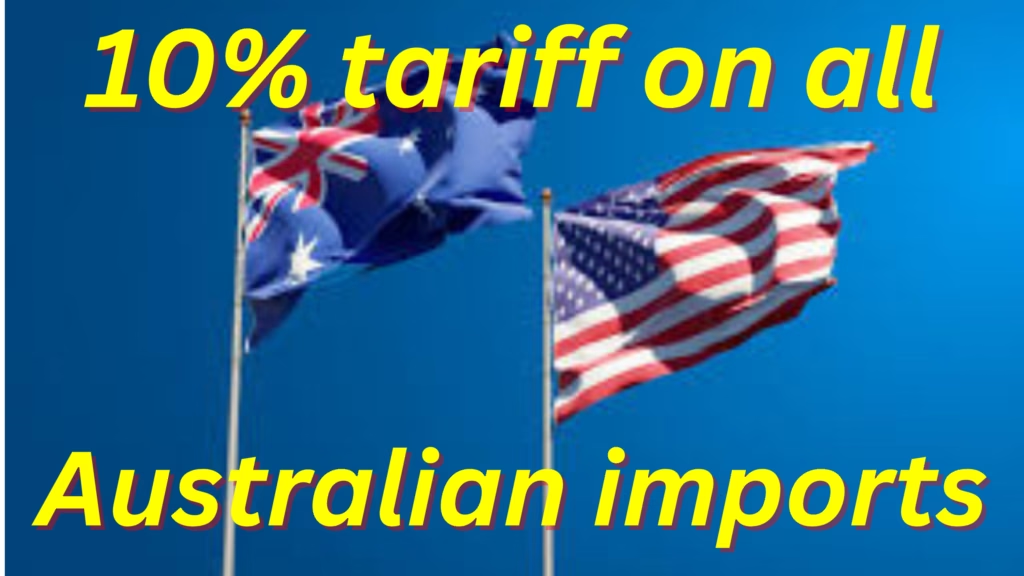

Trump’s Tariff Tsunami: How a 10% Tax on Australian Goods-As of April 3, 2025, at 02:02 AM PDT, the world of global trade is trembling under a bold new policy from U.S. President Donald Trump. Dubbed “Liberation Day” tariffs, a shocking 10% reciprocal tax has been imposed on Australian goods entering the United States, announced on April 2, 2025. This move, part of a broader strategy targeting multiple nations, threatens to disrupt lives from Sydney to Seattle. This blog uncovers the full story—key dates, tariff rates, impacts on everyday people, and what lies ahead—crafted exclusively for zikzik.in readers with a fresh perspective on this trade upheaval.
Table of Contents
- The Tariff Storm Unleashed: What’s Happening?
- Key Dates: A Timeline of Tension
- Tariff Rates: Breaking Down the Numbers
- Impact on the Common Man: From Groceries to Gas
- Economic Ripples: Australia vs. U.S. Perspectives
- Historical Context: Trade Wars Past and Present
- What Can Be Done? Voices of Hope
- Fact Check: Myths vs. Realities
- External Resources for Deeper Insight
- Disclaimer
The Tariff Storm Unleashed: What’s Happening?
Imagine waking up to news that the price of your morning coffee or favorite Aussie beef cut is about to soar. That’s the reality hitting Australia and the U.S. as Trump’s latest trade policy takes effect. On April 2, 2025, the U.S. rolled out a 10% tariff on all Australian imports, labeling it a “reciprocal” measure to counter perceived trade imbalances. This isn’t just about economics—it’s a political statement, aiming to boost American manufacturing while shaking up global markets. For Australians, it’s a jolt to an economy deeply tied to exports, while U.S. consumers may soon feel the pinch at the checkout.
Key Dates: A Timeline of Tension
- January 20, 2025: Trump’s inauguration sparks speculation of aggressive trade policies.
- March 15, 2025: Early hints of tariff plans emerge, targeting steel and aluminum globally.
- April 2, 2025: Official announcement of the 10% tariff on Australian goods, effective April 5, 2025.
- April 5, 2025: Tariffs kick in, marking the start of economic adjustments.
- April 9, 2025: Higher “reciprocal” tariffs on select nations begin, potentially influencing Australia’s response.
These dates set the stage for a trade saga that could stretch months or years, depending on negotiations and retaliatory moves.
Tariff Rates: Breaking Down the Numbers
Trump’s Tariff Tsunami: How a 10% Tax on Australian Goods is Rocking the Common Man in 2025!
The 10% tariff on Australian goods is just the beginning. Here’s a snapshot in tabular form:
| Country/Region | Tariff Rate | Effective Date | Key Affected Goods |
|---|---|---|---|
| Australia | 10% | April 5, 2025 | Beef, pharmaceuticals, gold |
| China | 34% | April 9, 2025 | Electronics, textiles |
| Canada | 25% | Ongoing | Energy, automotive parts |
| European Union | 20% | April 9, 2025 | Cars, machinery |
| Global Baseline | 10% | April 5, 2025 | All imports |
Australia dodged steeper rates faced by rivals like China (34%) or Vietnam (46%), thanks to its trade deficit with the U.S. and a 2005 free trade agreement. Yet, the 10% rate still stings, especially for export-driven sectors.
Impact on the Common Man: From Groceries to Gas
For Australians, the tariff hits where it hurts most. Farmers exporting beef—a $3 billion industry—face shrinking U.S. demand, potentially slashing profits and raising local prices as surplus floods domestic markets. Pharmaceutical workers at companies like CSL, spared from this round, worry about future taxes on vaccines and blood products, which could disrupt healthcare affordability. The Aussie dollar might dip below 60 U.S. cents, making imported goods like electronics or fuel costlier, hitting household budgets hard.
In the U.S., the common man feels the reverse shock. Higher tariffs on Australian beef could push steak prices up by 5-10%, while imported medicines might see gradual increases if future tariffs target pharmaceuticals. Gas prices could rise too, as trade disruptions affect global supply chains, adding pressure on already strained wallets.
Economic Ripples: Australia vs. U.S. Perspectives
Australia’s economy, with exports making up 20% of GDP, faces a 0.2% GDP risk, per early estimates. The real threat lies indirectly—China, Australia’s top trading partner, might slow down under U.S. tariffs, cutting demand for iron ore and coal. U.S. growth might dip to 2% in 2025, as higher costs deter manufacturers, but Trump bets on job gains in steel and auto sectors to offset this.
For the average Australian, this could mean tighter finances; for the American, it’s a trade-off between pricier goods and promised local jobs. Both sides feel the uncertainty, with markets like the ASX tumbling on April 2, 2025, signaling broader unease.
Historical Context: Trade Wars Past and Present
Trade tensions aren’t new. The 1930 Smoot-Hawley Tariff Act in the U.S. raised duties by 20%, sparking global retaliation and deepening the Great Depression. Fast forward to 2018, Trump’s first-term tariffs on steel (25%) and aluminum (10%) hit Australia briefly before exemptions, yet strained alliances. Today’s 10% tariff echoes that era, but with a global reach—34% on China and 25% on Canada signal a bolder stance. History warns of inflation and recession risks, yet Trump’s team sees it as a negotiation tool, not a war starter.
What Can Be Done? Voices of Hope
Australian leaders, led by Prime Minister Anthony Albanese, are exploring World Trade Organization challenges, though outcomes may take years. Businesses are urged to diversify markets—think Asia or Europe—while flexible contracts could cushion blows. Innovation in high-value exports like tech or rare minerals might offset losses. In the U.S., consumer pressure and corporate lobbying could push for exemptions, especially if prices soar. The path forward hinges on dialogue, not defiance.
Fact Check: Myths vs. Realities
- Myth: Tariffs will only hurt Australia’s elite exporters.
Reality: Small farmers and healthcare workers feel the pinch too, with rising costs hitting all. - Myth: U.S. consumers won’t notice.
Reality: Beef and medicine prices are already creeping up, with more to come. - Myth: This is just political posturing.
Reality: Markets are reacting, and supply chains are shifting—effects are real and lasting.
External Resources for Deeper Insight
- World Trade Organization Trade Data – Track global trade trends.
- Australian Government Department of Foreign Affairs and Trade – Insights on Australia-U.S. trade relations.
- U.S. Customs Service Information – Details on tariff implementation.
- Economic Analysis Hub – Independent economic forecasts
Disclaimer
The information in this blog is based on trade policy details available as of April 3, 2025, at 02:02 AM PDT. zikzik.in strives to deliver an engaging and insightful narrative but does not guarantee the absolute accuracy or completeness of the data. Readers are encouraged to verify facts with official sources like the U.S. Customs Service or Australian Department of Foreign Affairs and Trade. This content is for informational purposes only and should not be used for financial decisions or as official trade advice.
Gemini 2.5 Pro: Is This Google’s Most Powerful AI Ever?