

Table of Contents
- Introduction: The Timeless Pursuit of Inner Freedom
- Vairagya: The Core Concept in Indian Philosophy
- Detachment in the Bhagavad Gita: Krishna’s Teachings to Arjuna
- Stories from Mythology: Lessons in Letting Go
- Upanishads and Vedanta: Detachment as Path to Self-Realization
- Buddhist Influences: Non-Attachment and the Middle Way
- Modern Science: How Detachment Benefits the Brain
- Psychological Parallels: Mindfulness and Emotional Regulation
- Practical Applications: Cultivating Detachment Today
- Challenges and Misconceptions
- Conclusion: Embracing Detachment for a Balanced Life
Introduction: The Timeless Pursuit of Inner Freedom
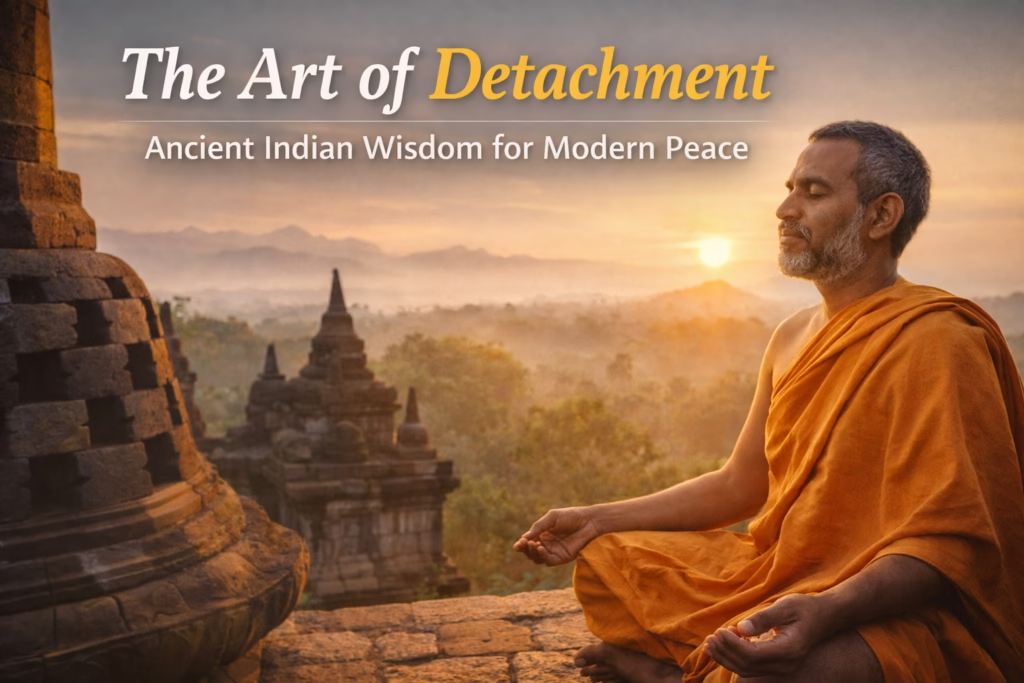
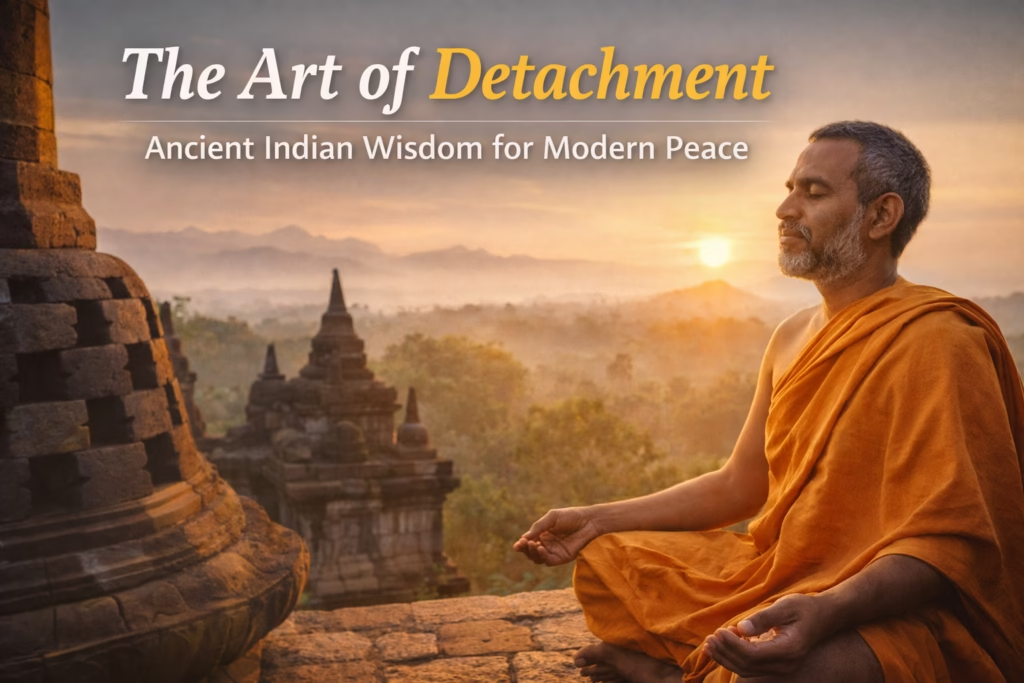
In a world overflowing with desires, distractions, and demands, the ancient Indian concept of detachment offers a profound antidote to suffering. Known as vairagya in Sanskrit, detachment isn’t about renouncing life or becoming emotionless—it’s the art of engaging fully while releasing the grip of attachment to outcomes, possessions, and ego. Rooted in mythology and philosophy from the Vedas to the Bhagavad Gita, this wisdom teaches that true peace arises when we act without clinging. For zikzik.in readers seeking calm amid chaos, this blog explores detachment’s essence in Indian mythology, its stories, teachings, and surprising alignment with modern science. Discover how letting go can lead to greater joy and fulfillment.
Vairagya: The Core Concept in Indian Philosophy
Vairagya, often translated as dispassion or non-attachment, is a cornerstone of Hindu, Jain, and Buddhist thought. It represents freedom from raga (attachment) and dvesha (aversion), allowing the mind to remain steady amid life’s ups and downs. In Patanjali’s Yoga Sutras, vairagya pairs with abhyasa (practice) to still mental fluctuations. The Upanishads describe it as turning away from transient pleasures toward eternal truth. Mythology portrays vairagya as the path of sages who renounce worldly ties for self-realization, yet it’s accessible to householders through balanced living.
Detachment in the Bhagavad Gita: Krishna’s Teachings to Arjuna
The Bhagavad Gita, part of the Mahabharata epic, offers the most practical guide to detachment. On the battlefield of Kurukshetra, Arjuna despairs at fighting kin. Krishna counsels karma yoga: perform duty without attachment to results (nishkama karma). Verse 2.47 states: Focus on action alone, not fruits—success or failure won’t bind you.
Krishna explains equanimity (samatva): Treat joy and sorrow, victory and defeat equally. This detachment frees from karma’s cycle, leading to liberation. Arjuna’s turnaround—fighting with resolve yet no hatred—embodies vairagya in action.
Stories from Mythology: Lessons in Letting Go
Indian mythology abounds with tales illustrating detachment.
- King Bharata’s Rebirth: A ruler renounced throne for meditation but attached to a deer fawn, reincarnating as one—warning against subtle attachments.
- Yayati’s Curse: Granted youth but cursed with endless desire, Yayati learned pleasures are fleeting, passing youth to son Puru for spiritual pursuit.
- Buddha’s Great Renunciation: Prince Siddhartha left palace, wife, son for enlightenment—detachment from luxury birthed compassion.
- Shankaracharya’s Life: The philosopher renounced home young, debating across India, teaching non-attachment to ego and world.
These narratives show detachment as strength, not weakness—releasing what binds for higher purpose.
Upanishads and Vedanta: Detachment as Path to Self-Realization
The Upanishads view the world as maya (illusion); attachment to it veils atman (self). Brihadaranyaka Upanishad advises seeing all as Brahman, dissolving separateness. Katha Upanishad’s Nachiketa rejects worldly gifts from Yama, seeking eternal knowledge.
Advaita Vedanta’s Shankara emphasized neti neti (not this, not that)—detaching from body, mind, roles to realize oneness. Detachment here is discernment: enjoy world without identifying as owner.
Buddhist Influences: Non-Attachment and the Middle Way
Though distinct, Buddhism’s anatta (no-self) and dukkha (suffering from clinging) echo vairagya. Buddha’s Four Noble Truths identify attachment as suffering’s cause; Eightfold Path cultivates non-clinging. Stories like the monkey trap—clinging to bait prevents escape—illustrate letting go’s freedom.
Modern Science: How Detachment Benefits the Brain
Neuroscience validates ancient wisdom. Detachment reduces amygdala activity (fear center), lowering stress hormones like cortisol by 20–30%. Mindfulness practices, inspired by vairagya, increase prefrontal cortex thickness for better emotional regulation.
Studies show non-attachment correlates with lower depression/anxiety rates. A 2023 review found meditators practicing detachment had 25% higher serotonin levels. Neuroplasticity allows rewiring: repeated non-clinging strengthens joy pathways over craving ones.
Psychological Parallels: Mindfulness and Emotional Regulation
Modern therapies like CBT and ACT draw from detachment—reframing thoughts without attachment reduces suffering. Stoicism’s influence on CBT mirrors Gita’s equanimity. Mindfulness-Based Stress Reduction (MBSR) programs, rooted in Buddhist non-attachment, cut anxiety by 40%.
Practical Applications: Cultivating Detachment Today
- Daily Reflection: Journal three things you’re grateful for without clinging.
- Mindful Action: Perform tasks focusing on process, not outcome.
- Digital Detox: Limit social media to reduce comparison attachment.
- Meditation: Practice 10 minutes daily observing thoughts without judgment.
- Generosity: Give without expecting return—fosters non-attachment.
Challenges and Misconceptions
Detachment isn’t indifference or escapism—it’s engaged presence. Misconception: It means no emotions or relationships. Reality: It allows deeper connections without fear of loss. Challenge: Society values accumulation; detachment requires courage against norms.
Conclusion: Embracing Detachment for a Balanced Life
The science of detachment in Indian mythology—from Gita’s karma yoga to Upanishads’ self-inquiry—offers timeless tools for peace. By releasing clinging, we gain freedom, resilience, and joy. Modern science confirms: Non-attachment rewires the brain for happiness. In a grasping world, detachment is liberation. Start small—let go one expectation today—and watch tranquility unfold.
Disclaimer
This blog is based on the author’s analysis and general philosophical insights. It aims to educate and inspire, without religious endorsement. Readers are encouraged to verify details independently. The author and zikzik.in are not responsible for actions taken based on this content.