


Table of Contents
- Introduction: Why Detachment Matters in a Clinging World
- Understanding Vairagya: The Essence of Non-Attachment
- The Bhagavad Gita: Krishna’s Blueprint for Detached Action
- Mythological Tales: Bharata, Yayati, and the Power of Letting Go
- Upanishadic Teachings: Seeing Beyond Illusion
- Buddha’s Renunciation: A Parallel Path to Freedom
- Shankaracharya’s Legacy: Detachment as Enlightenment
- Modern Relevance: Science and Psychology Validate Ancient Wisdom
- Practical Steps: Cultivating Detachment in Everyday Life
- Common Misunderstandings: Detachment Is Not Indifference
- Conclusion: Embrace Detachment for True Liberation
Introduction: Why Detachment Matters in a Clinging World
In an era dominated by endless desires—social media validation, material wealth, perfect relationships—the ancient Indian concept of detachment offers a revolutionary antidote to suffering. Known as vairagya, detachment isn’t about abandoning life or suppressing emotions; it’s the skillful art of engaging deeply while releasing the tight grip on outcomes, possessions, and ego. Rooted in mythology, Vedanta, and epics like the Mahabharata, this wisdom teaches that true peace emerges when we act with passion but without obsession over results. For zikzik.in readers navigating modern stress, this blog explores detachment’s profound insights from Indian mythology and philosophy, blending timeless stories with practical applications. Discover how letting go can lead to greater freedom, joy, and fulfillment.
Understanding Vairagya: The Essence of Non-Attachment
Vairagya, derived from “vi” (without) and “raga” (attachment), represents dispassion toward transient pleasures. It’s one of Yoga’s foundational limbs in Patanjali’s Sutras, paired with practice (abhyasa) to calm the mind. In Vedanta, vairagya arises from viveka (discernment)—distinguishing eternal self (atman) from temporary world (prakriti).
Mythology portrays vairagya as sages renouncing kingdoms for forests, yet it’s for all: householders practice it through balanced living. Detachment frees from raga-dvesha (likes-dislikes) cycle, reducing suffering. As Krishna advises in the Gita, it’s acting without craving fruits.
The Bhagavad Gita: Krishna’s Blueprint for Detached Action
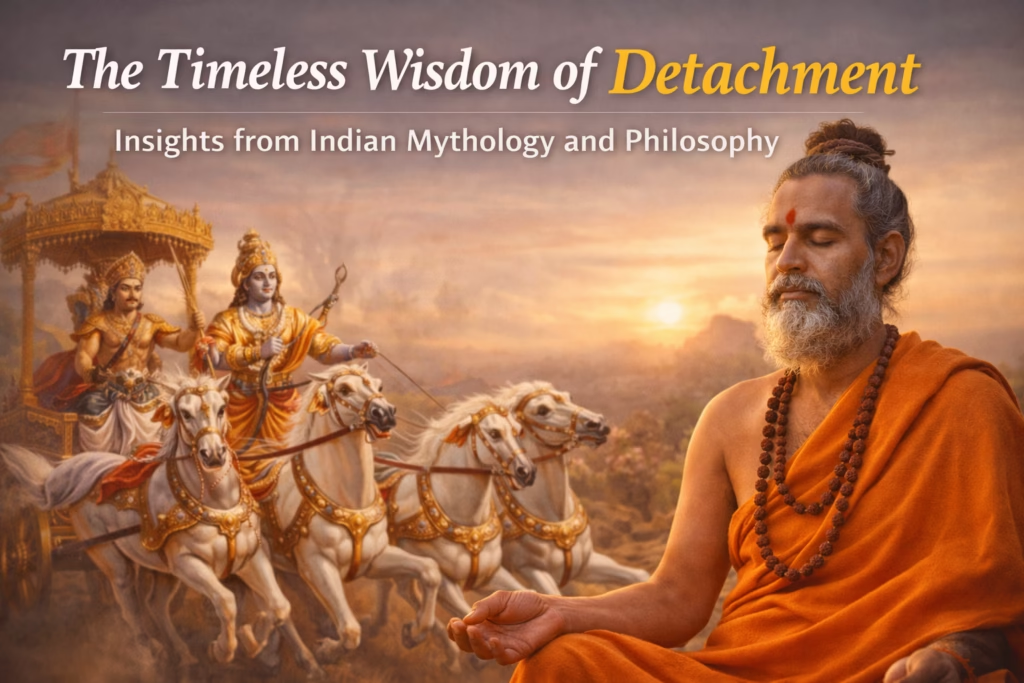
The Gita’s battlefield dialogue between Krishna and Arjuna is detachment’s masterpiece. Arjuna, overwhelmed by fighting kin, drops his bow in despair. Krishna introduces nishkama karma: Perform duty selflessly, without attachment to success or failure.
Key verses expand this:
- 2.47: Right to action, not fruits—detachment prevents bondage.
- 2.48: Samatva (equanimity)—treat victory/defeat equally.
- 5.10: Like lotus leaf in water, act untouched by results.
Krishna’s teachings turnaround Arjuna from paralysis to purposeful warrior, embodying detachment in crisis. This blueprint applies today: Work passionately, release outcome anxiety.
Mythological Tales: Bharata, Yayati, and the Power of Letting Go
Indian mythology abounds with detachment lessons.
- King Bharata’s Rebirth: A renowned emperor renounced throne for meditation but attached to a rescued deer fawn. At death, he reincarnated as a deer—subtle attachment binds even sages. This tale warns against hidden clingings, expanding vairagya’s depth.
- Yayati’s Endless Desire: Cursed with premature old age, Yayati borrowed youth from son Puru but found pleasures insatiable. Returning youth, he realized worldly joys are fleeting, pursuing spiritual path. It illustrates desire’s trap—detachment brings true satisfaction.
- Shiva’s Asceticism: The destroyer god meditates in detachment, undisturbed by worldly chaos. His dance (tandava) symbolizes creation/destruction cycle—embrace change without clinging.
These narratives expand detachment as strength: Releasing binds for higher freedom.
Upanishadic Teachings: Seeing Beyond Illusion
Upanishads view world as maya—illusion veiling Brahman (ultimate reality). Attachment to maya causes suffering; vairagya pierces veil.
Brihadaranyaka Upanishad: “Not this, not that” (neti neti)—detach from body, mind, roles to realize self.
Katha Upanishad: Nachiketa rejects Yama’s worldly offerings, seeking eternal knowledge—detachment prioritizes truth.
Vedanta’s Shankara expanded: World like dream—enjoy without identifying as “doer” or “owner.”
Buddha’s Renunciation: A Parallel Path to Freedom
Though Buddhist, Siddhartha’s story resonates. Prince left palace, family, luxury for enlightenment—detachment from desires birthed compassion.
Four Noble Truths: Suffering from clinging; cessation through non-attachment. Middle Way balances indulgence/asceticism.
His parables, like monkey trap (clinging fist can’t escape), mirror Zhuangzi but emphasize ethical non-clinging.
Shankaracharya’s Legacy: Detachment as Enlightenment
Adi Shankara (8th century) renounced home young, debating India to establish Advaita. His bhajans like Bhaja Govindam urge detachment from youth, wealth—focus on divine.
He taught viveka-vairagya: Discern real/unreal, detach from unreal. Legacy: Monasteries promoting renunciation for realization.
Modern Relevance: Science and Psychology Validate Ancient Wisdom
Neuroscience aligns: Detachment reduces amygdala reactivity, lowering cortisol 20–30%. Mindfulness (vairagya-inspired) increases prefrontal control for emotion regulation.
Psychology’s ACT therapy echoes Gita—accept thoughts without attachment, reducing anxiety 40%.
Stoicism parallels: Epictetus’ dichotomy of control mirrors nishkama karma.
Practical Steps: Cultivating Detachment in Everyday Life
- Daily Reflection: Journal attachments—release one expectation.
- Mindful Action: Focus on process in tasks, not results.
- Gratitude Practice: Appreciate without clinging.
- Nature Immersion: Observe impermanence in seasons.
- Meditation: 10 minutes observing thoughts detachedly.
- Generosity: Give freely, expecting nothing.
- Digital Detox: Limit feeds fueling comparison.
- Role Flexibility: See self beyond job/relationships.
- Forgiveness Ritual: Release grudges for peace.
- Service Focus: Act for others’ joy, not personal gain.
Challenges and Misconceptions
Misconception: Detachment means coldness or escapism. Reality: It’s warm engagement without possession—love deeply, hold lightly.
Challenge: Society rewards accumulation; detachment requires counter-cultural courage.
Conclusion: Embrace Detachment for True Liberation
Indian mythology and philosophy’s detachment—vairagya—isn’t denial but discernment: Engage fully, cling loosely. From Gita’s battlefield equanimity to Bharata’s rebirth warning, these teachings free from suffering’s chains. Science confirms: Non-clinging rewires for joy. In a grasping age, detachment is rebellion—choose freedom over fixation. Start small: One breath, one release. The path to peace unfolds.
Disclaimer
This blog is based on the author’s analysis and general philosophical insights. It aims to educate and inspire, without religious endorsement. Readers are encouraged to verify details independently. The author and zikzik.in are not responsible for actions taken based on this content.