

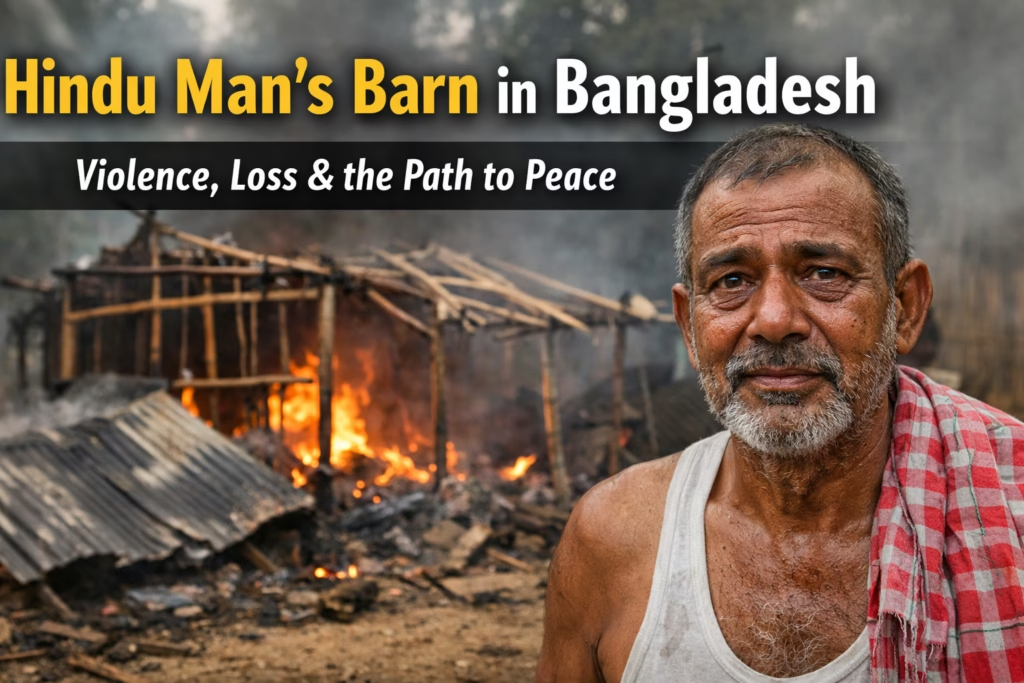
Burning of a Hindu Man’s Barn in Bangladesh: Understanding the Issue, Its Roots, and the Path Toward Peace
Communal harmony is one of the pillars of a peaceful society, but throughout South Asia, it has often been tested. Bangladesh, a country known for its cultural richness, linguistic pride, and resilient spirit, has long held the promise of equality for all its citizens. Yet, every now and then, news emerges of a Hindu family’s barn burned, a Hindu man attacked, or properties belonging to minorities targeted. These incidents raise painful questions about safety, justice, and the future of minority communities in the nation.
This blog aims to examine the issue with honesty, empathy, and balance — not to blame any religion or community, but to understand why such incidents occur, how they affect society, and what steps can create lasting peace.
1. The Context: Hindus in Bangladesh
Hindus are the largest minority in Bangladesh, contributing significantly to Bengali culture, literature, art, and history. Their presence in the region dates back thousands of years, long before the concept of modern borders.
A. A Rich Cultural Heritage
Hindus in Bangladesh share:
- Festivals like Durga Puja
- Classical music traditions
- Ancient temples and architectural heritage
- Agricultural traditions
- Folk art and literature
Their identity is deeply intertwined with the Bengali identity itself.
B. A Gradual Decline in Population
Over the past decades, the Hindu population in Bangladesh has fallen due to:
- Migration
- Property-related threats
- Economic challenges
- Sporadic communal violence
- Discrimination at local levels
This demographic change has made the community smaller and more vulnerable, especially in rural districts.
2. When a Hindu Man’s Barn Is Burned: What It Really Means
A barn is not just a structure. In rural Bangladesh, it represents:
- A family’s entire livelihood
- Stored grains
- Cattle shelter
- Agricultural tools
- The labor of many years
So when attackers burn a Hindu family’s barn, it is not just property damage — it is the destruction of income, dignity, stability, and a sense of belonging.
A. Why Barns and Properties Are Targeted
Burning a barn or home accomplishes multiple goals for attackers:
- It instills fear in the family and entire community
- It can push families to flee the village
- In some cases, it allows land-grabbing or illegal occupation
- It sends a message of dominance and intimidation
Many such attacks are not the result of personal hatred. They come from organized motives fueled by politics, rumors, or local rivalries.
3. The Underlying Reasons for Such Attacks
Understanding the causes is important. Violence does not emerge from a vacuum. It happens at the intersection of politics, economics, society, and misinformation.
A. Political Manipulation
In South Asia, minority communities often become pawns during:
- Election periods
- Political power struggles
- Local conflicts
- Rivalry between parties
A small rumor or local dispute can quickly turn into communal violence if political actors use it to incite mobs.
B. Radicalization and Misinformation
Bangladesh is constitutionally secular, but some extremist groups try to provoke divisions.
They use:
- Fake social media posts
- Misleading images
- Rumors about religious sentiments
- Hate speech
Many barn burnings and attacks on Hindu families have stemmed from unverified Facebook posts, especially in rural areas.
C. Land Grabbing as a Hidden Motive
This is one of the most common but least acknowledged factors.
Many Hindu families own ancestral land. Certain groups target them with violence to:
- Force them out
- Encroach on their land
- Create disputes
- Take over property quietly
Burning a barn is often a way of saying: “Leave this place; you are not safe here.”
D. Weak Law Enforcement in Certain Regions
While Bangladesh’s government often condemns such attacks, local systems sometimes fail:
- Police arrive late
- Investigations move slowly
- Political pressure interferes
- Victims fear filing complaints
- Witnesses remain silent
This creates a sense of impunity, encouraging attackers.
E. Community-Level Disputes That Escalate
Sometimes, small disagreements — over cattle, boundaries, loans, or personal behavior — turn into communal violence when fueled by rumors or mob mentality.
4. The Impact on the Hindu Community
When a Hindu man’s barn is burned, the impact goes far beyond physical loss.
A. Economic Devastation
A barn holds:
- Harvested crops
- Seeds
- Agricultural machinery
- Fodder
- Livestock shelter
Losing it means losing all productive capacity for the year — or longer.
B. Psychological Trauma
Families live in constant fear:
- Will our children be safe?
- Will the attackers return?
- Should we leave our village forever?
The trauma is long-lasting and deeply emotional.
C. Forced Movement and Migration
Many families abandon their homes after repeated threats.
Some move to nearby towns; others migrate to India.
This displacement destroys generations of belonging.
D. Loss of Trust Between Communities
Incidents like barn burning damage the social harmony that once defined rural Bangladesh.
Years of friendship between Hindu and Muslim families get overshadowed by fear and suspicion.
5. The Larger Picture: Why It Hurts Bangladesh’s Identity
Bangladesh is a nation born from the struggle for:
- Equality
- Human rights
- Freedom from oppression
- Linguistic justice
Communal violence goes against everything Bangladesh stands for.
A. Bengali Culture Is Naturally Inclusive
For centuries, Hindus and Muslims lived together, sharing:
- Folk songs
- Rivers and farmlands
- Food and traditions
- Festivals and rituals
This interwoven culture is uniquely Bengali.
B. Violence Weakens National Unity
A country grows stronger when all its citizens feel protected.
Attacks on minorities weaken:
- Social stability
- International reputation
- Public morale
- Investor trust
Peace is essential for national progress.
6. How Such Incidents Can Be Prevented
Lasting peace requires a united effort from government, community, media, and citizens.
A. Strong Law Enforcement
Authorities must ensure:
- Immediate arrests
- Fast-track trials
- Protection for witnesses
- Compensation for victims
Justice must be visible.
B. Digital Responsibility
Since many attacks begin with misinformation:
- Rumor control teams
- Fact-checking units
- Digital literacy workshops
- Monitoring extremist accounts
are crucial.
C. Protection for Minority-Dense Villages
Better policing during festivals, elections, and tense periods can prevent violence.
D. Land Protection Laws
Laws must block attempts to grab land from minority families.
E. Community Dialogue
Interfaith peace committees can reduce misunderstandings.
F. Education and Youth Involvement
Young people can lead the movement for:
- Tolerance
- Unity
- Rational thinking
- Compassion
7. Stories of Hope: When Humanity Triumphs
Despite painful incidents, Bangladesh also has inspiring examples:
- Muslim neighbors guarding Hindu temples
- Youth groups rebuilding burned homes
- Local leaders stopping mobs with courage
- Villagers sharing food with displaced families
These stories remind us that hate is not stronger than humanity.
Final Thoughts
The burning of a Hindu man’s barn in Bangladesh is not just an incident — it is a reflection of deeper societal issues. It highlights the need for protection, justice, and community awareness.
But Bangladesh also has the strength to overcome this challenge.
By embracing unity, rejecting extremism, and standing by its minority communities, the country can build a future where every citizen feels safe — regardless of religion.
A barn can be rebuilt.
A village can heal.
But trust, peace, and freedom must be protected every day.