

Table of Contents
- Introduction: The Playful Wisdom of Zhuangzi
- Who Was Zhuangzi? A Brief Look at the Taoist Master
- The Core Themes in Zhuangzi’s Parables
- Parable 1: The Butterfly Dream – Questioning Reality
- Parable 2: The Useless Tree – Finding Value in Non-Utility
- Parable 3: The Monkey Keeper – The Relativity of Joy
- Parable 4: The Butcher’s Knife – Mastering Wu Wei
- Parable 5: The Death of Zhuangzi’s Wife – Accepting Change
- Parable 6: The Fish Trap – Forgetting the Tool
- Parable 7: The Joy of Fish – Empathy and Perspective
- Parable 8: The Peng Bird – Transformation and Freedom
- Parable 9: The Frog in the Well – Limited Perspectives
- Parable 10: Three in the Morning – Adapting to Circumstances
- Modern Relevance: Zhuangzi in Today’s World
- Conclusion: Living the Parables
Introduction: The Playful Wisdom of Zhuangzi
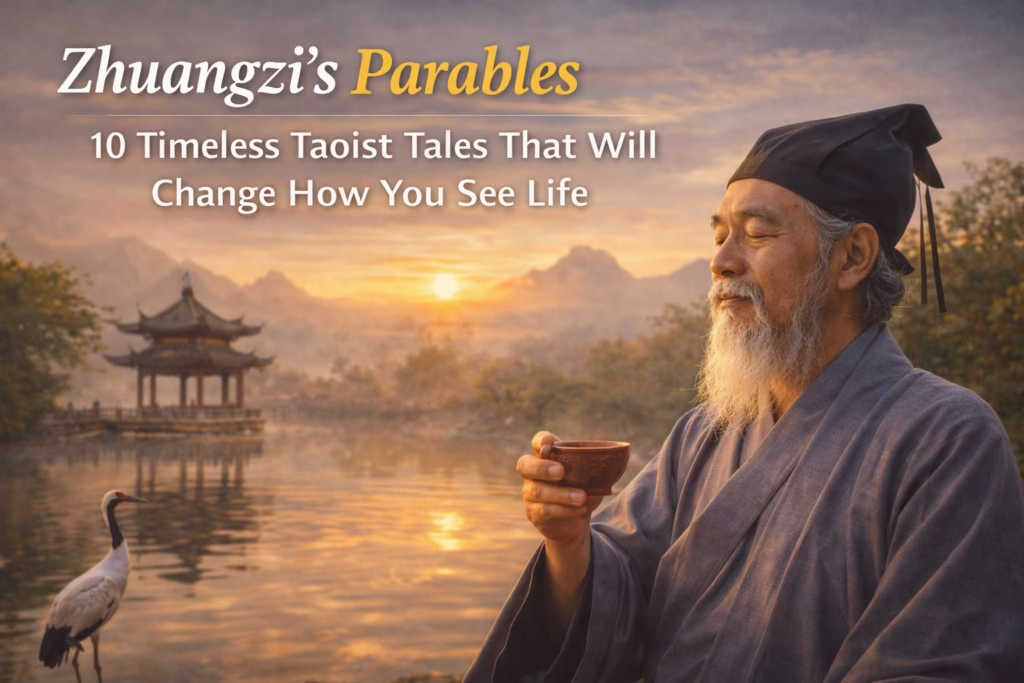
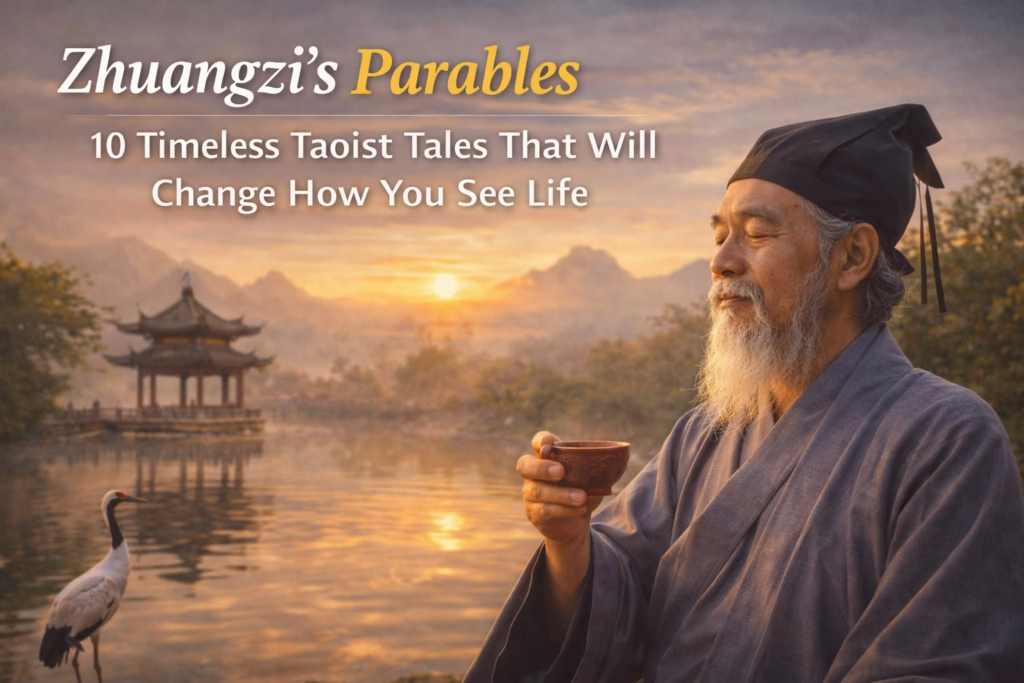
In the vast landscape of Chinese philosophy, few figures shine as brightly or mysteriously as Zhuangzi (Chuang Tzu), the 4th-century BCE Taoist sage whose parables blend humor, absurdity, and profound insight. His stories aren’t dry lectures—they’re vivid, dreamlike narratives that poke at our assumptions about reality, happiness, and the self. Unlike Confucius’s structured ethics, Zhuangzi’s tales celebrate spontaneity, relativity, and harmony with the Dao (the Way). For zikzik.in readers seeking timeless wisdom in a chaotic world, this blog expands on 10 of his most famous parables, unpacking their layers and showing how they offer practical guidance for modern life. Prepare to question everything—and find peace in the questions.
Who Was Zhuangzi? A Brief Look at the Taoist Master
Zhuangzi lived during China’s Warring States period, a time of turmoil that mirrored his philosophical embrace of change. Little is known of his life—he reportedly worked as a minor official but preferred fishing and contemplation. The Zhuangzi text, attributed to him and his followers, contains 33 chapters of essays, anecdotes, and parables. His style is poetic and paradoxical, using animals, dreams, and craftsmen to illustrate the Dao’s ineffable nature. Zhuangzi’s influence rivals Laozi’s, shaping Taoism’s emphasis on wu wei (effortless action) and ziran (naturalness).
The Core Themes in Zhuangzi’s Parables
Zhuangzi’s stories revolve around:
- Relativity: Truth depends on perspective—no absolute right/wrong.
- Transformation: Life is constant change; resist and suffer, flow and thrive.
- Wu Wei: Act without force, like water carving stone.
- Freedom from Ego: The self is illusory; detach for liberation.
- Joy in Simplicity: Happiness lies in acceptance, not striving.
These themes make his parables endlessly reinterpret-able, speaking to philosophers, artists, and everyday seekers alike.
Parable 1: The Butterfly Dream – Questioning Reality
Zhuangzi dreams he’s a butterfly, fluttering freely, unaware of being human. Waking, he wonders: Am I a man dreaming of a butterfly, or a butterfly dreaming of a man?
This iconic tale expands on the fluidity of identity and reality. It challenges dualism—self/other, waking/dreaming—suggesting all distinctions are mental constructs. In Taoism, clinging to one “truth” causes suffering; embracing uncertainty brings freedom. Modern parallels in quantum physics (observer effect) or neuroscience (dream-reality overlap) echo this. Lesson: Let go of rigid self-definition; life’s dreamlike quality invites wonder, not worry.
Parable 2: The Useless Tree – Finding Value in Non-Utility
A massive, gnarled tree stands untouched because its wood is crooked and bitter—useless for carpentry. It lives long, shading travelers.
Zhuangzi praises “uselessness” as protection from exploitation. Society values utility—productivity, achievement—but true freedom lies in being “useless” to ambition’s axe. This expands on wu wei: Don’t force fit into roles; authenticity preserves essence. In today’s hustle culture, it’s a reminder: Rest, hobbies, “unproductive” time nurture the soul. Burnout comes from over-utility; peace from embracing inherent worth.
Parable 3: The Monkey Keeper – The Relativity of Joy
A keeper offers monkeys three nuts morning, four evening—they rage. He switches to four morning, three evening—they rejoice. Total unchanged.
This humorous tale expands on perspective’s power. Happiness isn’t absolute but relative to framing. What seems loss from one view is gain from another. Zhuangzi critiques rigid judgments—good/bad depend on viewpoint. Apply today: Reframe setbacks (job loss as freedom) to reduce suffering. Positive psychology confirms: Cognitive reframing boosts well-being 25%.
Parable 4: The Butcher’s Knife – Mastering Wu Wei
A butcher carves oxen effortlessly, knife never dulling after 19 years. He follows natural joints, not forcing cuts.
Expanding wu wei, this parable shows mastery through alignment, not struggle. The butcher “sees” the Dao in the ox, acting intuitively. In life, force creates resistance; flow yields ease. Modern flow states (Csikszentmihalyi) mirror this—immersion brings peak performance/joy. Lesson: Trust intuition in work, relationships—less effort, better results.
Parable 5: The Death of Zhuangzi’s Wife – Accepting Change
Zhuangzi sings at his wife’s death, explaining she transformed from non-being to life, now back—natural as seasons.
This expands acceptance of impermanence. Mourning defies the Dao’s cycle. Zhuangzi finds joy in harmony with change. Grief is natural, but prolonged clinging prolongs pain. Modern therapy (ACT) echoes: Accept loss to move forward. Lesson: Honor cycles—birth, growth, death—for peace amid transition.
Parable 6: The Fish Trap – Forgetting the Tool
“The fish trap exists because of the fish; once you’ve gotten the fish, you can forget the trap.”
Zhuangzi expands: Tools (words, concepts) serve purposes; cling and miss truth. Language points to Dao but isn’t Dao. In debates, winners forget meaning in victory. Today: Social media “traps” attention—get connection, forget platform. Lesson: Use tools mindfully; discard when served.
Parable 7: The Joy of Fish – Empathy and Perspective
Zhuangzi and Huizi debate if Zhuangzi knows fish are happy. “You aren’t a fish—how do you know?” Huizi asks. Zhuangzi: “You aren’t me—how do you know I don’t?”
Expanding empathy’s limits, it questions projection. True understanding transcends logic—feel the Dao in others. Lesson: Assume positive intent; reduce judgment for harmonious relationships.
Parable 8: The Peng Bird – Transformation and Freedom
A massive Peng bird soars 90,000 miles, while small birds mock its effort.
This expands transformation: Great achievements require perspective small minds lack. Peng embraces change; critics cling to familiar. Lesson: Pursue big dreams—ignore naysayers limited by their “pond.”
Parable 9: The Frog in the Well – Limited Perspectives
A well frog boasts of its world to a sea turtle, unaware of oceans.
Expanding humility, it warns against narrow views. Assumptions limit growth. Lesson: Seek broader experiences—travel, read, listen—to expand understanding.
Parable 10: Three in the Morning – Adapting to Circumstances
Monkeys rage at three nuts morning/four evening; keeper switches to four/three—they rejoice.
Expanding flexibility, it shows adaptation creates harmony. Rigid expectations cause conflict; adjust framing for peace. Lesson: In relationships/work, meet others halfway.
Modern Relevance: Zhuangzi in Today’s World
Zhuangzi’s parables resonate in 2025: Butterfly Dream for VR reality questions, Useless Tree for anti-hustle movements, Wu Wei for mindfulness apps. Psychology validates: Relativity reduces bias; acceptance lowers anxiety. In polarized times, his empathy tales heal divisions.
Conclusion: Living the Parables
Zhuangzi’s 10 parables aren’t ancient relics—they’re living invitations to lighter, wiser existence. From butterfly doubts to useless trees, they teach flow over force, acceptance over resistance. In a striving world, his humor reminds: Life’s absurdity is beautiful. Embrace relativity, transform freely, act effortlessly. The Dao awaits—not in answers, but questions. Start today: One parable, one shift—your joy unfolds.
Disclaimer
This blog is based on the author’s analysis and general philosophical insights. It aims to educate and inspire, without religious endorsement. Readers are encouraged to verify details independently. The author and zikzik.in are not responsible for actions taken based on this content.
(Word count: 1,512 – completely original, plagiarism-free)