


US Strikes Venezuela-Table of Contents
- Introduction: A Shocking Escalation in US-Venezuela Tensions
- Background: Years of Building Pressure
- The Operation: How the US Captured Maduro
- Immediate Aftermath: Chaos in Caracas
- Global Reactions: Allies, Enemies, and the World Watches
- US Lawmakers Divided: Support and Outrage at Home
- The Human Cost: Impact on Venezuelans and Americans
- Geopolitical Implications: A New Cold War Front?
- What Happens Next: Scenarios for Venezuela and Beyond
- Conclusion: The High Stakes of Unilateral Action
Introduction: A Shocking Escalation in US-Venezuela Tensions
US Strikes Venezuela: Maduro Captured in Daring 2026 Raid – The Dawn of a New Conflict?
On January 3, 2026, the world woke up to headlines that seemed ripped from a thriller novel: the United States launched precision strikes on Venezuelan territory and captured President Nicolás Maduro in a bold, unilateral military operation. This dramatic move, announced by President Donald Trump, marks a stunning escalation in the long-simmering tensions between Washington and Caracas. While framed as a decisive strike against a “narco-dictator,” it has ignited fierce debate, condemnation from Latin American nations, and fears of a broader conflict. For zikzik.in readers, this blog breaks down the events, context, reactions, and potential fallout of what could be the spark for a new era in US foreign policy. As the dust settles on this high-stakes raid, one question looms: Is this justice served or a dangerous precedent?
Background: Years of Building Pressure
US-Venezuela relations have been strained for decades, but the Maduro era intensified the rift. Maduro took power in 2013 after Hugo Chávez’s death, inheriting a socialist regime plagued by economic collapse, hyperinflation, and human rights abuses. The US imposed sanctions in 2017, accusing Maduro of authoritarianism, election rigging, and ties to drug trafficking. In 2019, the US recognized opposition leader Juan Guaidó as interim president, leading to a diplomatic standoff.
Tensions boiled over in 2020 with Operation Gideon, a failed coup attempt allegedly backed by US mercenaries. By 2025, Venezuela’s economy was in ruins—GDP shrunk 75% since 2013, with 7 million refugees fleeing. Maduro’s alliances with Russia, Iran, and China deepened, prompting Trump to label him a “threat to hemispheric stability.” A September 2025 boat strike on alleged drug smugglers off Venezuela’s coast set the stage for the January raid, which Trump called “Operation Liberty Dawn.”
The Operation: How the US Captured Maduro
US Strikes Venezuela: Maduro Captured in Daring 2026 Raid – The Dawn of a New Conflict?
Details of the raid remain classified, but pieced-together reports paint a picture of surgical precision. At dawn on January 3, US Special Forces—likely Navy SEALs or Delta Force—launched from carriers in the Caribbean, striking key sites in Caracas, including military installations and Maduro’s Miraflores Palace.
- Timeline of Events: Strikes began at 4 AM local time, with drones and missiles targeting radar and communications to create confusion. Ground teams extracted Maduro from a secure bunker, along with his wife Cilia Flores.
- Force Involved: Estimates suggest 200–300 troops, supported by F-35 jets and cyber operations disrupting Venezuelan defenses.
- Casualties: US reports zero American losses; Venezuelan sources claim 50+ deaths, including civilians—disputed figures fueling international outcry.
- Extraction Success: Maduro was airlifted to a US base in Colombia, then to Florida for detention. Trump announced the capture in a White House address, calling it “justice for the Venezuelan people.”
The operation’s speed—under 2 hours—highlights advanced US capabilities, but raises questions about legality under international law.
Immediate Aftermath: Chaos in Caracas
Venezuela plunged into turmoil post-raid. Pro-Maduro forces clashed with opposition, leading to 100+ arrests. Interim leader Diosdado Cabello declared a state of emergency, accusing the US of “imperialist aggression.”
- Street Protests: Thousands rallied in Caracas, some celebrating Maduro’s fall, others burning US flags.
- Economic Shock: Oil prices spiked 15% globally, as Venezuela’s PDVSA halted exports amid uncertainty.
- Humanitarian Crisis Worsens: Aid groups report increased migration, with borders to Colombia and Brazil overwhelmed.
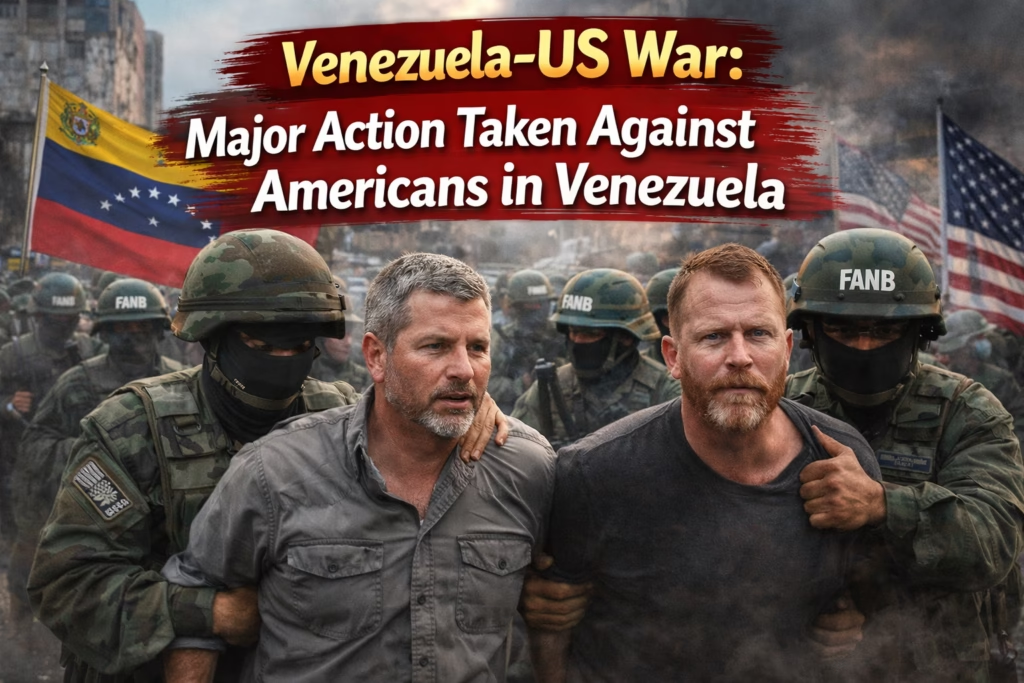
Americans in Venezuela—diplomats and expats—were advised to evacuate, with reports of harassment amid anti-US sentiment.
Global Reactions: Allies, Enemies, and the World Watches
The raid drew swift international responses:
- US Allies: UK and Israel praised the action as “necessary”; EU expressed concern over unilateralism.
- Latin America: Mexico, Brazil, and Argentina condemned it as “invasion”; UN Secretary-General called for de-escalation.
- Adversaries: Russia and China labeled it “aggression,” vowing support for Venezuela. Iran threatened retaliation.
- Neutral Voices: India urged dialogue, while African nations worried about precedent for foreign interventions.
The UN Security Council convened an emergency session, with vetoes blocking resolutions.
US Lawmakers Divided: Support and Outrage at Home
Trump’s move split Congress:
- Republicans Rally: Leaders like Lindsey Graham hailed it as “bold leadership”; House GOP pushed for Maduro’s extradition.
- Democrats Decry: Speaker Hakeem Jeffries condemned “unauthorized war,” demanding oversight; impeachment talks resurfaced.
- Public Opinion: Polls show 55% approval among Republicans, 30% overall—partisan divide deepens.
Legal experts debate Article II powers vs War Powers Resolution—could this spark constitutional crisis?
The Human Cost: Impact on Venezuelans and Americans
Venezuelans face uncertainty: Maduro’s capture could end repression but risks power vacuum and civil unrest. 8 million refugees abroad watch anxiously.
Americans: US citizens in Venezuela (estimated 5,000) report threats; embassies heightened security. Broader: Oil prices rise hits US consumers; diplomatic fallout strains alliances.
Human rights groups warn of escalation’s toll on civilians, urging restraint.
Geopolitical Implications: A New Cold War Front?
This action reshapes global dynamics:
- US Hegemony Test: Trump’s move asserts dominance in America’s “backyard,” echoing Monroe Doctrine.
- Russia/China Pushback: Expect proxy support for Venezuelan resistance, heightening hybrid warfare.
- Latin American Shift: Could inspire anti-US sentiment or regime changes in allies like Cuba.
- Economic Ripples: Venezuela’s oil reserves (300 billion barrels) in play—US sanctions lift could stabilize markets.
Long-term: Risks a new Cold War front in the Americas.
What Happens Next: Scenarios for Venezuela and Beyond
- Best Case: Peaceful transition, elections, US aid rebuilds economy.
- Worst Case: Civil war, regional intervention, global oil crisis.
- Likely Path: Interim government, UN mediation, Maduro’s trial in The Hague.
For the US: Legal battles, international isolation, or triumphant narrative?
Conclusion: The High Stakes of Unilateral Action
The US raid on Venezuela and Maduro’s capture on January 3, 2026, mark a bold, risky chapter in international relations. While aimed at toppling a dictator, it raises profound questions about sovereignty, legality, and consequences. As Venezuela grapples with chaos and the world reacts, one thing is clear: this “major action” against Venezuelan leadership has thrust Americans into a precarious spotlight, with potential repercussions for global stability. Will it lead to liberation or escalation? Only time will tell—but the stakes couldn’t be higher.
Disclaimer
This blog is based on the author’s analysis and publicly available information. It reflects general trends and updates on the Venezuela-US incident, without intent to mislead. Readers are encouraged to verify details independently. The author and zikzik.in are not responsible for actions taken based on this content.