
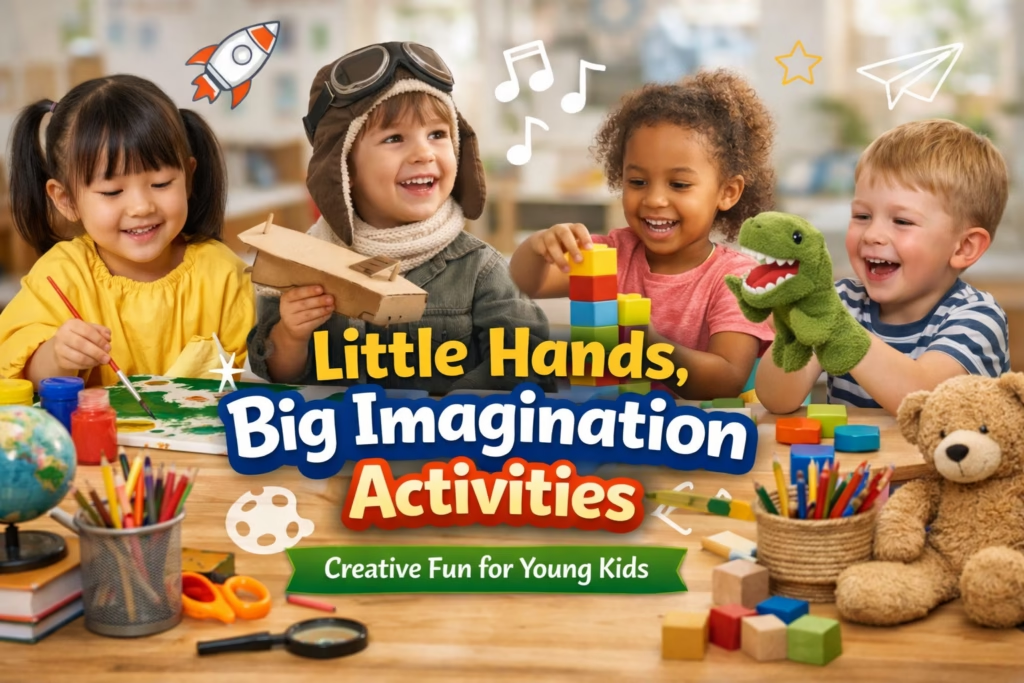

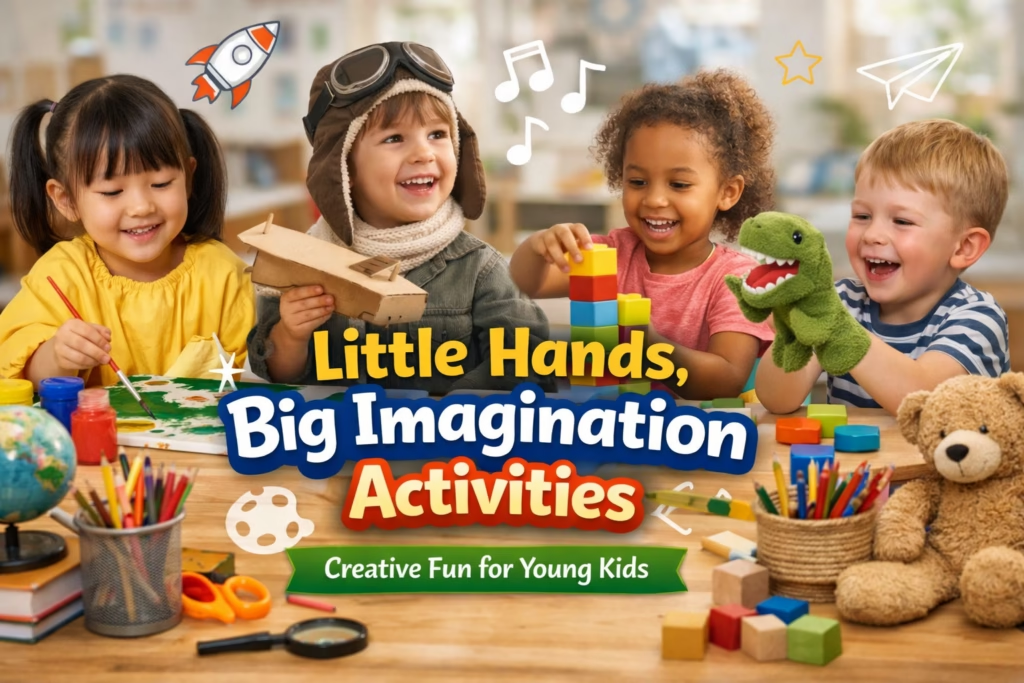
Little Hands, Big Imagination:
In a world filled with screens, schedules, and fast-paced routines, childhood creativity has become more precious than ever. For small kids, creativity is not just about making art—it is about thinking freely, expressing emotions, solving problems, and discovering who they are. The activities children engage in during their early years play a crucial role in shaping their imagination, confidence, and overall development.
Creative activities help children learn joyfully. They strengthen fine motor skills, enhance communication, boost emotional intelligence, and encourage curiosity. Most importantly, they allow children to explore without fear of mistakes. This blog explores the best creative activities for small kids, focusing on fun, learning, and holistic growth.
Why Creativity Is Essential for Small Kids
Creativity is a foundation skill, not an extra. When children engage in creative activities, they learn to think independently and adapt to new situations. It helps them express feelings they may not yet have words for and builds self-confidence as they see their ideas come to life.
Creative play also improves:
- Cognitive and problem-solving skills
- Hand-eye coordination
- Emotional expression and stress relief
- Social skills through group activities
- Language and communication abilities
By encouraging creativity early, adults give children tools they will use throughout life.
1. Drawing, Coloring, and Free Art
One of the simplest and most powerful creative activities for kids is drawing. With crayons, sketch pens, watercolors, or chalk, children can create entire worlds on paper.
Why it works:
Drawing improves fine motor skills and allows children to express their imagination freely. There are no right or wrong drawings—only ideas.
Creative ideas:
- Free drawing without instructions
- Coloring with unusual tools like cotton, sponges, or fingers
- Drawing emotions using colors
- Story-based drawing where kids draw scenes from a story
Let children choose their colors and subjects. Avoid correcting their work—appreciation matters more than perfection.
2. Craft Activities Using Everyday Materials
Crafting turns simple household items into magical creations. Paper cups, cardboard boxes, old newspapers, bottle caps, and fabric scraps can become toys, animals, or decorations.
Benefits:
Craft activities enhance creativity, problem-solving, and patience. Kids learn how to transform ordinary objects into something meaningful.
Creative ideas:
- Paper plate animals
- Cardboard box houses or cars
- Newspaper hats and masks
- Bottle cap flowers
- Recycled robot crafts
Crafting also teaches children the value of recycling and caring for the environment.
3. Storytelling and Story Making
Storytelling is a powerful creative tool for developing imagination and language skills. Even very young children can create stories using pictures, toys, or simple prompts.
Why storytelling matters:
It improves vocabulary, listening skills, memory, and emotional understanding. Children also learn how to structure thoughts.
Creative ways to encourage storytelling:
- Picture cards for story creation
- Story cubes with characters, places, and actions
- Completing an unfinished story
- Puppet-based storytelling
- Drawing a story and narrating it
Let kids invent silly, magical, or adventurous stories—creativity thrives without limits.
4. Music, Singing, and Rhythm Play
Music naturally attracts children. Singing, clapping, dancing, and playing simple instruments allow kids to explore rhythm and sound creatively.
Benefits of musical activities:
- Improves memory and listening skills
- Develops coordination and rhythm
- Boosts emotional expression
- Encourages confidence and joy
Creative music activities:
- Singing action rhymes
- Making instruments using containers and grains
- Rhythm games with claps and taps
- Dancing freely to different types of music
Music allows children to express happiness, excitement, and even calmness in a healthy way.
5. Pretend Play and Role Play
Pretend play is one of the most important creative activities for small kids. When children pretend to be doctors, teachers, shopkeepers, or superheroes, they explore real-life situations creatively.
Why pretend play is powerful:
It helps children understand the world around them, develop empathy, and improve communication skills.
Role-play ideas:
- Kitchen play with toy utensils
- Doctor and patient play
- School classroom role play
- Grocery shop pretend play
- Superhero or fantasy characters
Pretend play also helps children process emotions and build social confidence.
6. Building and Construction Activities
Building activities encourage creativity along with logical thinking. Blocks, LEGO, wooden pieces, or even pillows can be used for construction play.
Benefits:
- Enhances problem-solving skills
- Improves spatial awareness
- Encourages patience and focus
- Boosts creativity and innovation
Creative building ideas:
- Block towers and bridges
- Pillow forts and tunnels
- Building cities or villages
- Creating patterns with blocks
Let children build, break, and rebuild—this process is part of learning.
7. Sensory Play for Creative Exploration
Sensory play engages children’s senses—touch, smell, sight, and sound. It is especially beneficial for small kids as it supports brain development.
Sensory activity ideas:
- Playing with clay or playdough
- Sand and water play
- Rice, beans, or grain sensory bins
- Texture boards with different materials
Sensory play calms children and allows them to explore creatively at their own pace.
8. Outdoor Creative Activities
Nature is a wonderful teacher. Outdoor play inspires creativity through exploration and movement.
Creative outdoor ideas:
- Drawing with chalk on the ground
- Leaf and stone art
- Nature treasure hunts
- Gardening and planting seeds
- Free running, jumping, and imaginative games
Outdoor activities support physical health while sparking curiosity and imagination.
9. Simple Science and Exploration Activities
Creativity also exists in curiosity and experimentation. Simple science activities encourage kids to ask questions and explore outcomes.
Creative science ideas:
- Mixing colors with water
- Floating and sinking experiments
- Growing plants from seeds
- Shadow play with sunlight
These activities make learning exciting and build a love for discovery.
10. Creative Writing and Early Expression
For slightly older small kids, creative writing and expression help develop language skills.
Ideas for creative expression:
- Drawing and writing together
- Describing pictures in their own words
- Making greeting cards
- Creating simple poems or rhymes
Encouraging children to express thoughts builds confidence and clarity.
How Parents and Teachers Can Encourage Creativity
Adults play a key role in nurturing creativity. The environment matters as much as the activity.
Tips to support creativity:
- Provide open-ended materials
- Allow free play without constant instructions
- Praise effort, not just results
- Avoid comparisons
- Give children time and space to explore
Remember, creativity grows when children feel safe, respected, and appreciated.
Conclusion: Growing Creative Minds for a Bright Future
Creative activities are not just entertainment for small kids—they are essential building blocks for lifelong learning. When children draw, build, imagine, sing, or pretend, they are developing skills that shape their future personalities and abilities.
By encouraging creativity through simple, joyful activities, parents and educators help children become confident thinkers, expressive communicators, and curious learners. Small hands may create simple things today, but those little creations shape big dreams for tomorrow.
Let children imagine freely—because every masterpiece begins with imagination.