

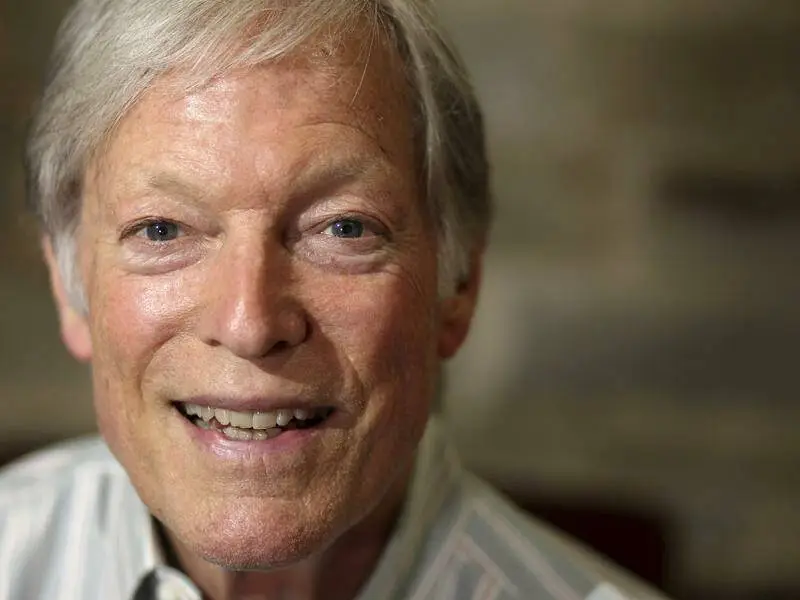
Richard Chamberlain, a name synonymous with television’s golden era, captivated audiences worldwide with his charm, talent, and versatility. From his breakout role as Dr. Kildare to becoming the “King of the Miniseries,” Chamberlain’s journey is a fascinating blend of triumphs and personal evolution. This blog explores his life, career, achievements, business ventures, political involvement, and enduring legacy, offering a heartfelt tribute for zikzik.in readers following his recent passing.
Table of Contents
Early Life and Formative Years
George Richard Chamberlain was born on March 31, 1934, in Beverly Hills, California, to Elsa Winnifred and Charles Axiom Chamberlain, a salesman. Growing up in a middle-class household, Chamberlain faced a challenging childhood due to his father’s struggle with alcoholism, which made him shy and introverted. He described himself as a “lugubrious kid, painfully thin, with a long, sad face,” often feeling out of place in the real world. Despite this, he excelled in athletics, becoming a track star at Beverly Hills High School, where he graduated in 1952.
Chamberlain’s passion for acting ignited at Pomona College, where he studied painting and art history. A pivotal moment came during his senior year when he performed in George Bernard Shaw’s Arms and the Man, realizing his calling as an actor. However, his dreams were delayed when he was drafted into the U.S. Army in 1956, serving 16 months in Korea and rising to the rank of sergeant. After his discharge, Chamberlain returned to pursue acting, determined to make his mark in Hollywood.
Career Journey: From Dr. Kildare to Miniseries Royalty
Chamberlain’s career took off in 1961 when he landed the lead role in Dr. Kildare, a medical drama that aired on NBC until 1966. As the idealistic Dr. James Kildare, he became a teen idol, receiving up to 12,000 fan letters a week and sparking near-riots at public appearances. The show’s success made him a household name, but Chamberlain sought to break free from the “Prince Charming” image it created.
Determined to prove his versatility, Chamberlain moved to England in the late 1960s, where he honed his craft in classical theater. His portrayal of Hamlet at the Birmingham Repertory Theatre in 1969 earned critical acclaim, with British reviewers praising his depth and grace. Returning to the U.S., Chamberlain found his stride in the 1980s, earning the title “King of the Miniseries.” He starred in Shōgun (1980) as John Blackthorne, a shipwrecked English navigator in feudal Japan, and The Thorn Birds (1983) as Father Ralph de Bricassart, a priest torn between love and faith. Both miniseries were global sensations, with The Thorn Birds drawing over 110 million viewers.
Chamberlain’s later career included roles in films like The Three Musketeers (1973) and The Towering Inferno (1974), as well as guest appearances on shows like Will & Grace and Desperate Housewives, where he embraced playing gay characters. He also returned to the stage, starring in Broadway revivals of My Fair Lady and The Sound of Music, showcasing his enduring passion for theater.
Business Ventures and Creative Pursuits
While Chamberlain was primarily an actor, he explored various creative and business endeavors. His singing career, sparked by Dr. Kildare, led to hit singles like “Three Stars Will Shine Tonight,” which reached No. 10 on the Billboard Hot 100 in the 1960s. He released albums such as Richard Chamberlain Sings and Joy in the Morning, blending his acting fame with musical talent.
Chamberlain was also an accomplished painter and sculptor, showcasing his artwork in galleries. His creative pursuits extended to writing, with the publication of his memoir Shattered Love in 2003, where he publicly came out as gay, and My Life in Haiku in 2013, a collection of poetry reflecting his introspective side. Financially, Chamberlain benefited from his acting career but missed out on significant merchandising revenue from Dr. Kildare, such as stethoscopes and pillow covers featuring his image, due to a contractual oversight.
Political Involvement and Advocacy
Chamberlain was not deeply involved in politics but did engage in advocacy, particularly around environmental issues. In the 1980s, he lobbied in Sacramento and Washington, D.C., to protect the Tuolumne River in Yosemite National Park, helping secure its designation under the National Wild and Scenic System. His efforts included narrating Audubon television specials to raise awareness.
He also became an advocate for LGBTQ rights after coming out in 2003. Chamberlain’s openness about his sexuality, after decades of hiding it due to Hollywood’s homophobia, inspired many in the community. He spoke candidly about the challenges of being a closeted actor, advising others to be cautious in an industry that often penalized authenticity. Despite opportunities to support political candidates, Chamberlain largely avoided partisan involvement, citing a lack of time for thorough research.
Achievements That Defined His Legacy
Chamberlain’s career is studded with milestones that cemented his status as a television icon. Below is a table of his key achievements:
| Year | Achievement | Impact |
|---|---|---|
| 1961 | Starred in Dr. Kildare (1961–1966) | Became a teen idol, receiving 12,000 fan letters weekly; won a Golden Globe in 1963. |
| 1969 | Played Hamlet at Birmingham Repertory Theatre | Earned critical acclaim, proving his depth as a classical actor. |
| 1980 | Starred in Shōgun Miniseries | Won a Golden Globe and an Emmy nomination; introduced sushi to American audiences. |
| 1983 | Starred in The Thorn Birds Miniseries | Drew 110 million viewers; won a Golden Globe and an Emmy nomination; became a global sex symbol. |
| 2003 | Published Memoir Shattered Love | Came out as gay, becoming an advocate for LGBTQ rights and inspiring authenticity. |
| 2013 | Published My Life in Haiku | Showcased his poetic talent, offering fans a glimpse into his introspective side. |
Chamberlain’s four Golden Globe wins and multiple Emmy nominations highlight his ability to captivate audiences across genres, from medical dramas to historical epics.
Recent Updates (March 2025)
Richard Chamberlain passed away on March 29, 2025, just two days before his 91st birthday, at his home in Waimanalo, Hawaii. According to reports, the cause was complications from a stroke. His death marks the end of an era for fans who cherished his contributions to television and theater. Tributes have poured in, celebrating his legacy as a trailblazer in the miniseries genre and an advocate for authenticity. Fans and peers alike are remembering him for his grace, talent, and the warmth he brought to every role.
Conclusion: A Legacy of Resilience
Richard Chamberlain’s journey from a shy Beverly Hills boy to a global television icon is a story of resilience, talent, and self-discovery. His roles in Dr. Kildare, Shōgun, and The Thorn Birds not only defined television history but also showcased his ability to evolve as an actor. Beyond the screen, Chamberlain’s advocacy for environmental causes and LGBTQ rights, along with his creative pursuits in painting and poetry, reveal a multifaceted individual who lived life on his own terms. For zikzik.in readers, Chamberlain’s story is a reminder of the power of authenticity and perseverance. What’s your favorite Chamberlain role? Share your thoughts in the comments and follow zikzik.in for more inspiring stories!
Disclaimer
The information in this blog is based on publicly available data and general knowledge as of March 31, 2025. zikzik.in aims to provide an informative overview of Richard Chamberlain’s life and career but does not guarantee the accuracy, completeness, or timeliness of the content. Readers are encouraged to verify facts through reliable sources. This blog is for informational purposes only and does not constitute legal, financial, or professional advice. Any actions taken based on this content are at the reader’s own risk.